Oxtail
Oxtail is the tail of beef cattle, skinned and cut into thick rounds between the bones. Each piece has a little meat around a bone with lots of collagen, which turns into a rich, silky sauce with long, slow cooking.
US: Oxtail · UK: Oxtail · EU (NL): Ossenstaart · TR: Kuyruk
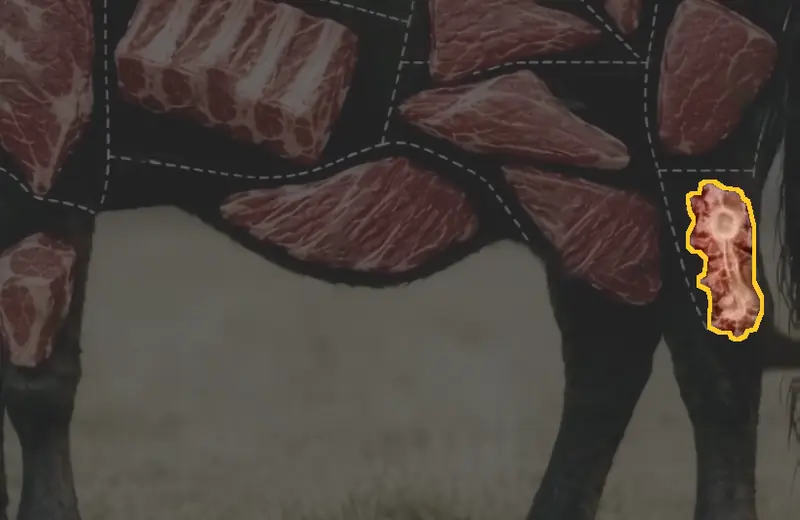
Quick facts
Primal: Tail
Tenderness: Tough until braised
Fat: High
Price: Mid (bone-heavy)
Best: Braise, stew, soup
What is oxtail called in other countries?
| United States | Oxtail |
|---|---|
| United Kingdom | Oxtail |
| France | Queue de bœuf |
| Germany | Ochsenschwanz |
| Netherlands | Ossenstaart |
| Spain | Rabo de toro or rabo de vaca |
| Turkey | Kuyruk; öküz kuyruğu |
Names and cut lines vary by country and by butcher, so ask for the cut by description if the name doesn't match. Dutch and Turkish names are common butcher usage; there is no official Turkish retail cut standard. How we name cuts
Texture, fat and price
Pieces from the thick end have the most meat; the thin end is mostly bone and best for stock. Oxtail is fatty, so braise it a day ahead, chill it and lift off the fat before reheating. Allow 400–500 g raw per person.
How to cook oxtail
- Braise
- Stew
- Soup
- Pressure cooker
- Season the pieces and brown them well in batches.
- Soften onions, carrots and garlic, add tomato paste, wine and stock to just cover.
- Cover and cook at 150 °C (or simmer very gently) for 3–4 hours, until the meat falls from the bone.
- Skim off the fat (easiest after chilling overnight) and reduce the sauce.
Oxtail cooking temperatures
| Stage | Centre temperature |
|---|---|
| Braising liquid | a gentle simmer, about 90–95 °C |
| Done | meat falls off the bone, usually after 3–4 hours |
Braised oxtail is cooked far above the USDA safe minimum of 63 °C (145 °F). Judge it by texture, not by temperature.
Oxtail nutrition facts
We could not find a USDA FoodData Central entry for raw oxtail, so we don’t show figures. We don’t estimate nutrition values.
Recipes
Related cuts
Shank (another gelatin-rich braising cut) · Short Ribs (rich and bony, for braising or smoking) · Chuck (for stews with more meat)
Sources
- USDA Food Safety and Inspection Service, Safe Minimum Internal Temperature Chart.