Tenderloin
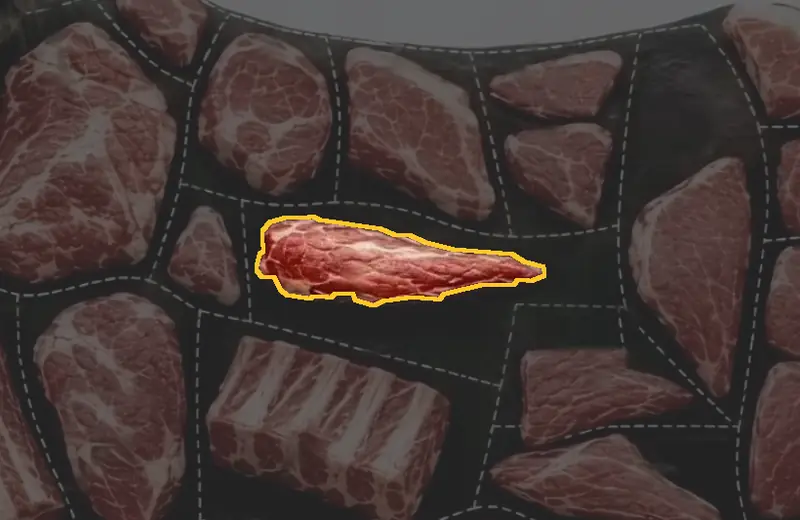
Tenderloin is a long, narrow muscle that lies inside the loin, under the backbone, between the ribs and the hip. It does almost no work, so it is the most tender cut of beef, and also one of the leanest and most expensive.
US: Tenderloin (filet mignon) · UK: Fillet · EU (NL): Ossenhaas · TR: Bonfile
Quick facts
Primal: Loin
Tenderness: The most tender cut
Fat: Very lean
Price: Most expensive
Best: Pan-sear, roast whole
What is tenderloin called in other countries?
| United States | Tenderloin. Steaks: filet mignon; centre roast: chateaubriand. |
|---|---|
| United Kingdom | Fillet; fillet steak |
| Australia / New Zealand | Eye fillet |
| France | Filet; steaks: tournedos; centre: chateaubriand |
| Germany | Filet (Rinderfilet) |
| Austria | Lungenbraten |
| Netherlands | Ossenhaas |
| Spain | Solomillo |
| Turkey | Bonfile |
| Trade codes | IMPS 189 (full tenderloin), 190 (defatted), 1190 (tenderloin steaks) |
Names and cut lines vary by country and by butcher, so ask for the cut by description if the name doesn't match. Dutch and Turkish names are common butcher usage; there is no official Turkish retail cut standard. How we name cuts
Texture, fat and price
The tenderloin is soft and fine-grained with a mild flavour. A whole one is thick at the hip end (the butt), even in the middle and thin at the tail. The middle gives the neatest steaks (filet mignon) and the chateaubriand roast. Because it is so lean, it dries out quickly when overcooked, so it is often served rare to medium-rare, wrapped in bacon or with a rich sauce.
How to cook tenderloin
- Pan-sear
- Roast whole
- Grill
- Beef Wellington
- Trim off the silver skin. For a whole roast, fold the thin tail under and tie it so the thickness is even.
- Season and sear on all sides in a very hot pan.
- Steaks: finish in the pan with butter, or in a 200 °C oven. Whole: roast at 120–160 °C until about 5 °C below target.
- Rest 5 minutes for steaks, 10–15 for a roast, then slice.
Tenderloin cooking temperatures
| Stage | Centre temperature |
|---|---|
| Rare | 49–52 °C (120–125 °F) |
| Medium-rare | 54–57 °C (130–135 °F) |
| Medium | 57–63 °C (135–145 °F) |
Take the meat off the heat 2–3 °C before your target; it keeps rising while it rests. The USDA's safe minimum for beef steaks and roasts is 63 °C (145 °F) with a 3-minute rest. Lower temperatures are common for steak but sit below that guideline.
Tenderloin nutrition facts
Per 100 g, raw. USDA description: “Beef, loin, tenderloin steak, boneless, separable lean and fat, trimmed to 0" fat, all grades, raw”.
| Nutrient | Per 100 g |
|---|---|
| Energy | 147 kcal |
| Protein | 21.7 g |
| Total fat | 6.67 g |
| Saturated fat | 2.36 g |
| Cholesterol | 61 mg |
| Sodium | 44 mg |
| Iron | 2.49 mg |
Source: USDA FoodData Central, FDC ID 173988. Cooking removes water, so values per 100 g of cooked meat are higher. Actual values vary with the animal, grade and trim.
Recipes
Compare
Related cuts
Ribeye (more flavour and fat, a little less tender) · T-Bone (a slice of tenderloin on the bone) · Striploin (the muscle on the other side of the bone)
Sources
- USDA Food Safety and Inspection Service, Safe Minimum Internal Temperature Chart.
- USDA Agricultural Marketing Service, Institutional Meat Purchase Specifications (IMPS), Series 100: Fresh Beef.
- USDA Agricultural Research Service, FoodData Central.