Skirt Steak vs Flank Steak: What’s the Difference?
Skirt steak comes from the diaphragm and inner belly (plate); flank steak comes from the belly muscles further back. Skirt is thinner, fattier and more intense, with a looser grain. Flank is thicker, leaner and firmer.
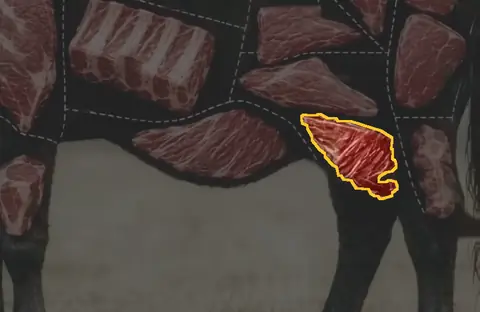
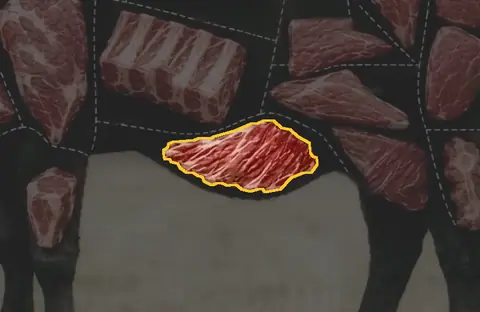
Side by side
| Skirt | Flank | |
|---|---|---|
| Primal | Plate | Flank |
| Tenderness | Tender if sliced thin | Chewy unless sliced thin |
| Fat | Well marbled | Lean |
| Price | Mid (outside skirt costs more) | Mid |
| Best cooked | Grill hot, fajitas | Marinate, grill hot |
| UK name | Skirt | Flank (bavette) |
| Dutch name | Skirt steak | Vinkenlap |
| Turkish name | – | Karın |
| Energy per 100 g raw | 232 kcal | 165 kcal |
| Fat per 100 g raw | 17.6 g | 8.29 g |
| Protein per 100 g raw | 18 g | 21.2 g |
Nutrition from USDA FoodData Central (FDC IDs 173400 and 169433); see each cut guide for the exact USDA entry.
The main differences
- Shape: skirt is a long, thin strip about 1–2 cm thick; flank is a wider, flat oval about 2–3 cm thick.
- Fat and flavour: skirt has more marbling and a stronger, beefier taste; flank is leaner and milder.
- Grain: skirt’s grain runs across the strip and is more open; flank’s grain runs along its length.
- Cooking: both need very high heat, a short cook and thin slicing across the grain.
Which should you buy?
Choose skirt if you are making fajitas or carne asada and want maximum flavour.
Choose flank if you want a leaner steak that slices into neat, even strips.