Picanha vs Tri-Tip: What’s the Difference?
Picanha is the fat-capped top sirloin cap; tri-tip is a lean, triangular muscle from the bottom sirloin. Both are hip cuts with big beef flavour, but picanha has a thick layer of fat on top and an even grain, while tri-tip is leaner and its grain changes direction.
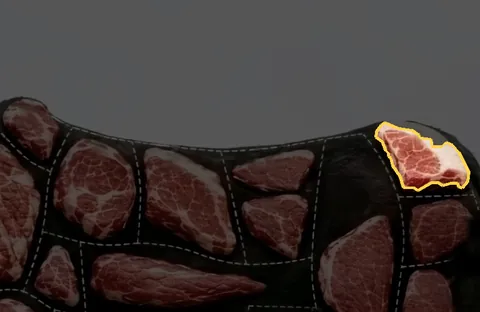
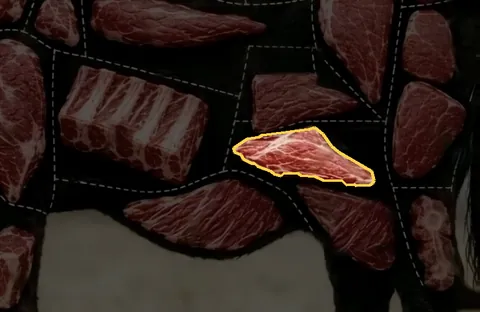
Side by side
| Picanha | Tri-Tip | |
|---|---|---|
| Primal | Sirloin (top) | Sirloin (bottom) |
| Tenderness | Tender | Fairly tender |
| Fat | Thick fat cap, lean meat | Lean to moderate |
| Price | Mid to premium | Good value |
| Best cooked | Grill, rotisserie | Grill, smoke, roast |
| UK name | Rump cap | Tri-tip (part of the rump) |
| Dutch name | Staartstuk | Ezeltje |
| Turkish name | Picanha | Tri-tip |
| Energy per 100 g raw | 179 kcal | 165 kcal |
| Fat per 100 g raw | 10.9 g | 8.55 g |
| Protein per 100 g raw | 20.1 g | 20.6 g |
Nutrition from USDA FoodData Central (FDC IDs 173062 and 168734); see each cut guide for the exact USDA entry.
The main differences
- Position: picanha sits on top of the hip; tri-tip sits lower, near the flank and the bottom of the sirloin.
- Fat: picanha keeps a 1–2 cm fat cap that bastes it as it cooks; tri-tip has only light marbling.
- Slicing: picanha has one grain direction; tri-tip must be cut in two where the grain changes, then sliced.
- Style: picanha is the Brazilian churrasco cut; tri-tip is the Californian Santa Maria cut.
Which should you buy?
Choose picanha if you want a rich, fatty cut for skewers or a crispy fat cap.
Choose tri-tip if you want a leaner roast that feeds a group for less money.